Includes the original gravure. With $450 contributed in your name to a Native American cause of your choosing.
Talk to the Camp KeeperMoving — Apsaroke
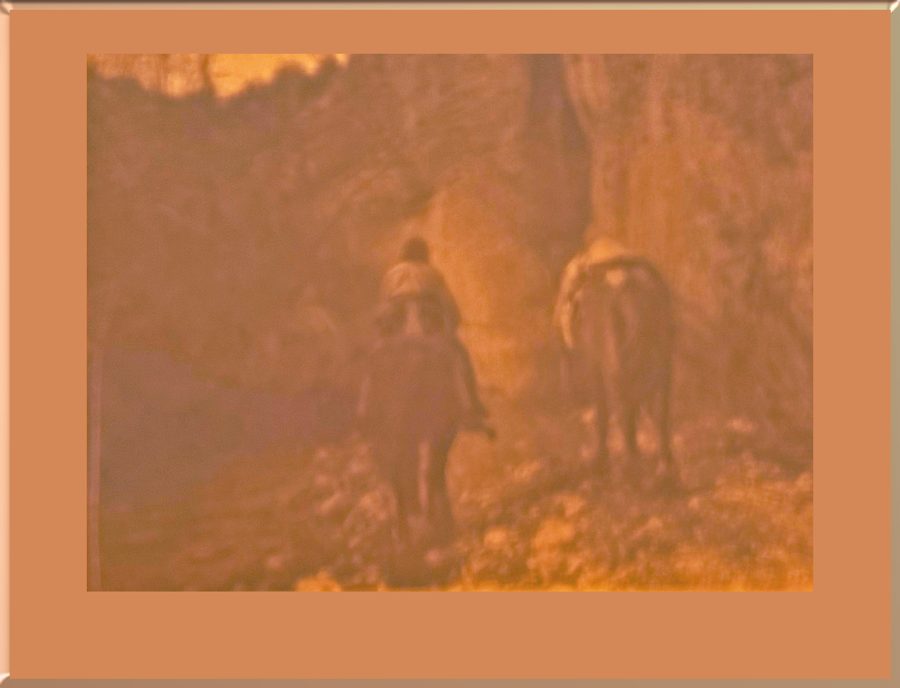
An Apsaroke woman leads a packhorse through a canyon cut by water and stone — moving camp, moving on. Curtis made this photograph in 1908 among the Crow, the people who called themselves Apsáalooke. The image is quiet and directional. You feel the distance ahead more than the ground beneath.
This is a Volume plate — one of the working plates from the main body of The North American Indian, used to produce the gravures that illustrated Curtis’s twenty-volume masterwork. Unlike Portfolio plates, Volume plates carry the full weight of the documentary record. This is where Curtis did his real work.
The subject is a woman. That is not incidental. Curtis documented the Apsaroke women with particular attention — their endurance, their role in the life of the camp, the weight they carried on migrations that covered hundreds of miles across open country.
Apsaroke (Crow) · Plains · Montana · 1908
The Apsaroke — known to the world as the Crow — were among the most formidable peoples of the northern plains. Their territory centered on the Yellowstone River drainage. They were horse people, warriors, and travelers on a scale that impressed even Curtis, who had documented dozens of nations.
Curtis wrote of their migrations with rare specificity. He recorded a single summer when 950 lodges attempted to cross the Yellowstone River, half a mile wide and swollen with high water. One band of 450 lodges lost their courage and turned back. Of those who went forward, he wrote: “A splendid picture of the nomads’ life they made as the caravan moved across far-reaching plain, hill, and valley. The crossing of a broad stream added much to the animation of the scene.”
Of their winter geography, Curtis noted: “In the thick forests along the banks of mountain streams the Apsaroke made their winter camps.” The canyon in this image — cliff wall, stream, the woman moving through — is exactly that landscape.
Curtis documented Apsaroke women with particular attention. He described how they could carry a quarter of a buffalo apparently without great exertion, and travel 250 miles across harsh wilderness in four days and nights. The woman in this plate is not background. She is the subject.
How the Camp Keeper prices these plates →
Also Included
The Original Gravure — Free with Your Purchase
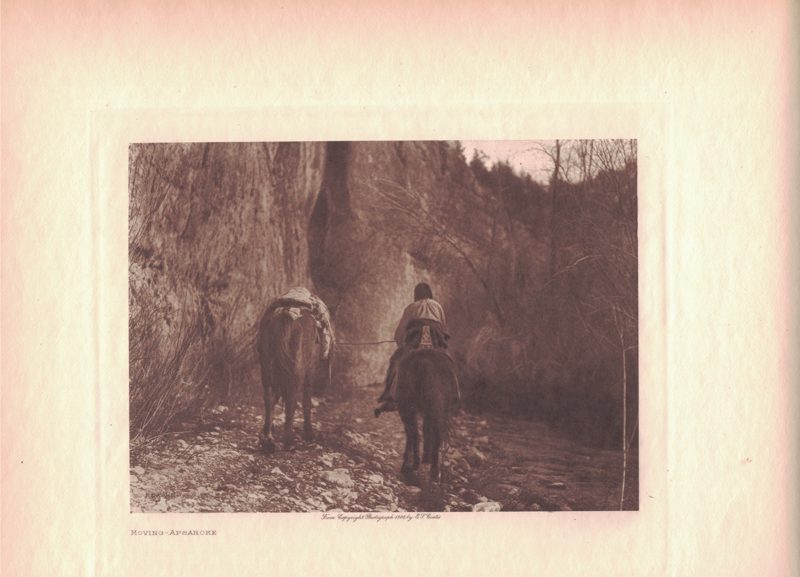
The photogravure print produced from this plate, published in The North American Indian, Volume 4. Included at no additional charge with the acquisition of the copper plate.
The Camp Keeper’s plate ownership exceeds what is currently offered. See more plates from the collection →